
For most Sri Lankan homes, a gas geyser is cheaper to run than an electric geyser. At the current CEB domestic tariff and Rs. 4,365 for a Litro 12.5 kg cylinder, four hot showers a day cost about Rs. 3,000 a month on gas, against roughly Rs. 4,700 to Rs. 9,500 extra on an electricity bill.
A gas geyser and a "gas water heater" are the same thing. Below we show every number we used, so you can redo the sums with your own bill.
Which electricity tariff and gas price is this based on?
Electricity. The PUCSL approved the current domestic tariff with effect from 11 May 2026 (PUCSL Approved Tariff Table, Annex 2, May 2026). In its decision of 10 November 2026, the PUCSL decided to "continue with the existing end-user electricity tariffs" for October to December 2026 (PUCSL Decision on Electricity Tariffs, November 2026). The domestic rates for a 30-day billing cycle are:
| Monthly use | Energy charge (Rs. per unit) | Fixed charge (Rs. per month) |
|---|---|---|
| Up to 60 units | 5.00 for units 0 to 30, 9.00 for units 31 to 60 | 80 (up to 30 units), 210 (31 to 60) |
| 61 to 180 units | 14.00 for units 0 to 60, 20.00 for 61 to 90, 28.00 for 91 to 120, 44.00 for 121 to 180 | 400, 1,000 or 1,500 depending on the highest block reached |
| Above 180 units | 32.50 for all of the first 180 units, 100.00 for every unit above 180 | 2,500 |
Source: PUCSL, tariff effective from 11 May 2026, continued by the decision of 10 November 2026. Taxes and any other items on your bill are not included.
Gas. Litro kept domestic prices unchanged for November 2026, with the 12.5 kg cylinder at Rs. 4,365 (Newswire, 1 November 2026). That is Rs. 349.20 per kg. Litro publishes refill prices by district, and Laugfs sets its own price, so check what you actually pay.
Energy in a kilo of gas. LP gas holds 47.3 MJ per kg (IPCC 2006 Guidelines, Volume 2, Table 1.2, default net calorific value). That is about 13.1 kWh of heat per kg, or about 164 kWh in a full 12.5 kg cylinder.
How much does it cost to run a geyser in Sri Lanka each month?
Our assumptions, stated plainly so you can change them:
- One shower uses 50 litres of water at 40°C (for example 5 litres a minute for 10 minutes).
- Water comes in at 27°C, so each litre is heated by 13°C. This is our assumption for lowland homes, not a measured figure. Colder water means higher costs for both options.
- Heating 1 litre of water by 1°C takes 4.186 kJ. One shower therefore needs about 0.76 kWh of heat.
- The gas geyser turns 80% of the gas energy into hot water. The electric geyser turns 95% of its electricity into hot water. Both are our working assumptions, not figures published for any model we sell. We test what happens if they are wrong further down.
- 30 days a month.
| Usage | Heat needed per month | Gas used | Electricity used |
|---|---|---|---|
| Light: 2 showers a day | 45 kWh | 4.3 kg (about a third of a cylinder) | 48 units |
| Medium: 4 showers a day | 91 kWh | 8.6 kg (about 0.7 of a cylinder) | 95 units |
| Heavy: 6 showers a day | 136 kWh | 12.9 kg (about one cylinder) | 143 units |
Now the money. Gas costs the same per kg whatever else you do. Electricity does not: the geyser's units are added on top of what your home already uses, so the extra cost depends on where your bill sits today. We show three homes: one using 60 units a month before the geyser, one using 100, and one using 200.
| Usage | Gas geyser cost | Electric: extra on a 60-unit home | Electric: extra on a 100-unit home | Electric: extra on a 200-unit home |
|---|---|---|---|---|
| Light: 2 showers a day | Rs. 1,507 | Rs. 2,307 | Rs. 2,280 | Rs. 4,774 |
| Medium: 4 showers a day | Rs. 3,013 | Rs. 4,711 | Rs. 7,177 | Rs. 9,547 |
| Heavy: 6 showers a day | Rs. 4,520 | Rs. 10,041 | Rs. 11,951 | Rs. 14,321 |
Electric figures are the difference between the monthly bill with and without the geyser, using the PUCSL domestic tariff in force on 19 November 2026. Gas figures use Rs. 4,365 per 12.5 kg (Litro, November 2026).
A quick sense check: Rinnai lists the REU-5CFC as burning about 0.6 kg of gas an hour at full output. A 10-minute shower at full output would use about 0.1 kg, while our table assumes about 0.07 kg per shower. The figures are in the same range.
Why does an electric geyser cost so much more on a CEB bill?
Because of the 180-unit line. A home using 180 units pays Rs. 6,420 a month on the current tariff. At 181 units, all 180 units are charged at Rs. 32.50, the fixed charge rises to Rs. 2,500 and the extra unit costs Rs. 100, so the bill jumps to about Rs. 8,450. An electric geyser is often the appliance that pushes a home over that line.
Above 180 units, every extra unit costs Rs. 100, so a kWh of hot water from an electric geyser costs about Rs. 105. From gas it costs about Rs. 33 at our assumed efficiency. That gap is the whole story for larger families.
What changes the answer?
- Your tariff block. A small home far below 60 units pays the least for electric heating. Even there, our table shows gas cheaper for light use, by about Rs. 800 a month.
- Gas price rises. Litro reviews prices each month. A 10% rise adds about Rs. 150 to Rs. 450 a month across our three usage levels. Gas still stays cheaper in every case in the table.
- Efficiency. If the gas geyser only managed 70% instead of 80%, gas costs would rise by about a seventh (Rs. 1,722, Rs. 3,444 and Rs. 5,165). Still below every electric figure above.
- Longer showers or colder water. Both costs go up in step, but the electric bill climbs faster because it crosses into higher blocks.
- Cylinder logistics. Heavy use means roughly one extra cylinder a month for hot water alone. You need a spare and someone to change it.
- Power cuts. An electric geyser gives no hot water in an outage. Some gas geysers need mains power too: the REU-VR1620WG-ASN lists 220V AC ignition and 43 W electrical consumption. The REU-5CFC uses battery ignition.
When is an electric or solar geyser the better choice?
Be honest about your situation. An electric geyser can make more sense if:
- One person showers occasionally, and the saving of a few hundred rupees a month does not justify a dedicated cylinder, regulator and piping.
- You have no safe, ventilated place for a gas geyser and cylinder, or your building does not allow LP gas.
- You already have rooftop solar panels that produce more than you use in the day. Hot water heated from your own surplus does not follow the bill sums above.
A solar water heater has almost no running cost on sunny days and suits a home with high daily use and a sunny roof. It costs more to install and needs a backup for wet weeks. We do not sell solar water heaters, so compare quotes from specialists.
What do you need to know about gas geyser installation and ventilation?
Litro's safety guidance says LPG cylinders "should never be used in a poorly ventilated room", must be installed at ground level and never below ground or in basements, must stay upright with the valve on top, and must not be placed where they may overheat (Litro Health, Safety and Environment page, seen 19 November 2026). Litro also notes that LP gas is heavier than air, so a low-level leak may not be noticed immediately.
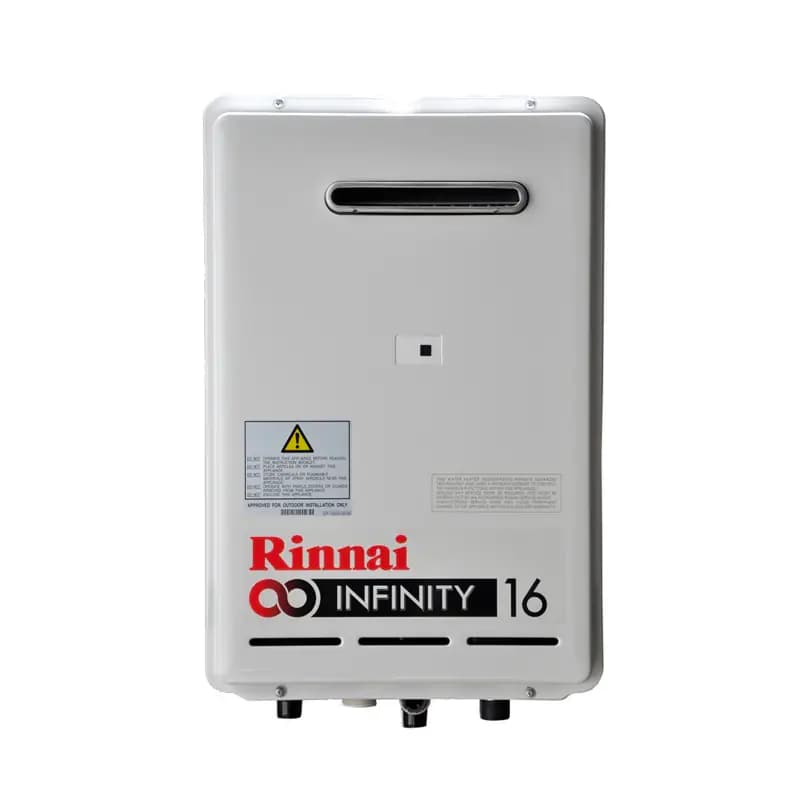
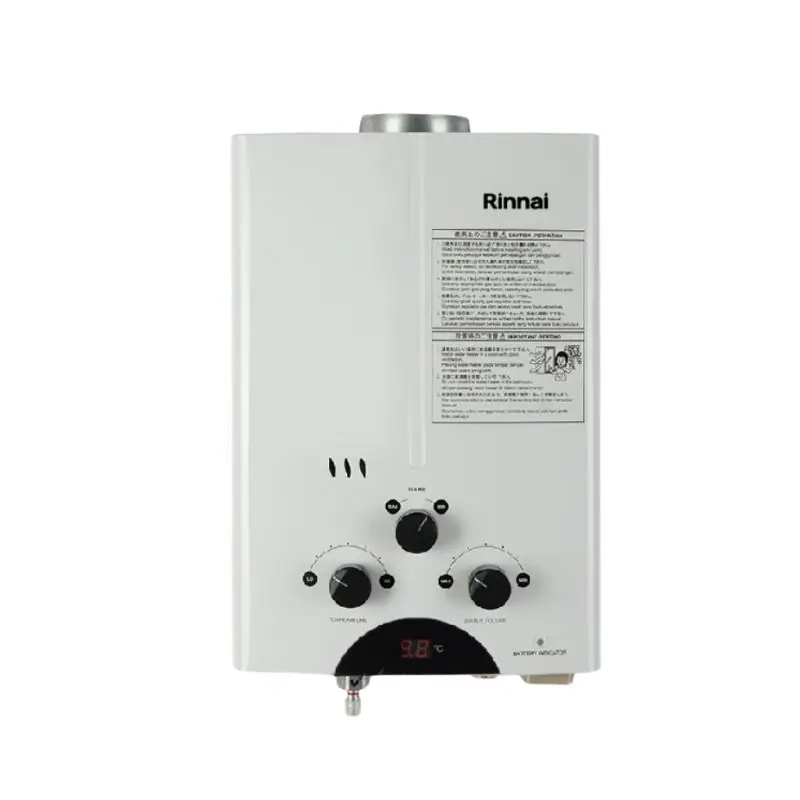
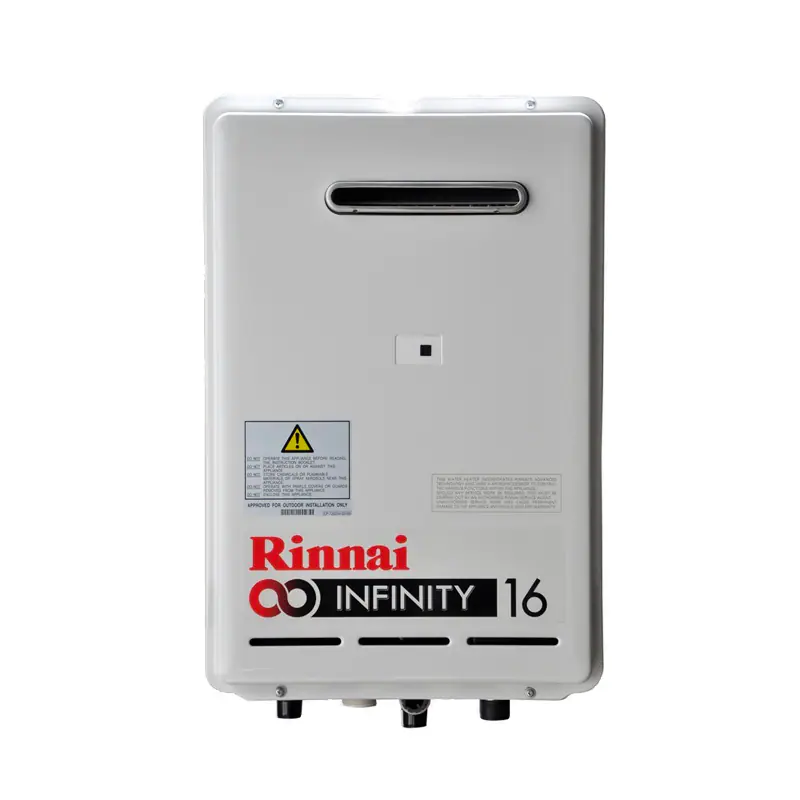
For the geyser itself, follow the model's installation type. The REU-VR1620WG-ASN is an external unit. The REU-5CFC is listed as external, or internal only with good ventilation.
Which Rinnai gas geysers suit a Sri Lankan home?
M. Abdul Ally has been the sole Rinnai agent in Sri Lanka since 1975. Here are two models to start with. You can see the full range of Rinnai gas water heaters in our catalogue.
| Model | Bathrooms | Hot water flow | Price |
|---|---|---|---|
| REU-5CFC | 1 | 5 litres a minute | Rs. 57,820 |
| REU-VR1620WG-ASN Infinity | 1 to 2 | 16 litres a minute | Rs. 224,790 |
Model prices are read live from our catalogue (checked 21 November 2026). Installation, cylinder, regulator and piping are extra.
The REU-5CFC suits a single bathroom and one shower at a time. It also has a flame-failure gas cut-off and a 20-minute safety timer. The REU-VR1620WG-ASN suits homes where two people may want hot water at once.
If you would like help choosing, visit our Colombo showroom or request a quote with your number of bathrooms and where the geyser would go.
Frequently asked questions
Is a gas geyser cheaper than an electric geyser in Sri Lanka?
On the tariff and gas price in force in November 2026, yes, in every case we worked out. The gap is smallest in very small homes and largest in homes using more than 180 units a month.
How long does a 12.5 kg cylinder last for a geyser?
On our assumptions, about three months at two showers a day, about six weeks at four, and about a month at six. Longer showers or colder water shorten that.
Does a gas geyser work during a power cut?
It depends on the model. The REU-5CFC uses battery ignition. The REU-VR1620WG-ASN lists 220V AC ignition, so it needs mains power or a backup supply.
Is a gas water heater the same as a gas geyser?
Yes. "Geyser" is the everyday word in Sri Lanka.
Will the electricity tariff change?
The PUCSL reviews tariffs every quarter. Re-check the domestic rates on the PUCSL website before deciding, and rerun the sums with your own bill.